

Key Takeaways
Saves money on most full-service airline routes
Carry-on bags are included in standard fares on most major U.S. carriers, making them the default cost-efficient choice for frequent travelers who fly often.
Faster airport experience from curb to gate
Skipping bag drop and baggage claim can save 30 to 60 minutes on each end of a trip - a meaningful gain on tight connections or short turnaround travel.
Eliminates risk of lost or delayed luggage
Keeping your bag in the cabin means it arrives with you, removing one of the most frustrating variables in air travel.
Checked bags offer unrestricted packing freedom
Full-size toiletries, bulkier clothing, and gear that can't fit overhead all travel easily when checked, reducing pre-trip stress significantly.
Checked bags reduce mental load during the journey
Without worrying about overhead bin space or liquid limits, you can focus on the trip rather than the logistics of fitting everything into a smaller bag.
Carry-on keeps you nimble between destinations
For multi-city itineraries, a single carry-on gives you the flexibility to move quickly without coordinating large luggage between hotels or transport hubs.
Checked bag fees add up across multiple trips
At $30-$40 each way on many U.S. carriers, a round-trip checked bag can cost $60-$80 - and those fees multiply quickly for frequent travelers or families.
Carry-on requires strict packing discipline
Size and weight limits, liquid restrictions, and limited space mean carry-on travel demands real planning and often forces trade-offs on what you bring.
Overhead bin space is not guaranteed
On full flights, bins fill quickly and gate-checking becomes likely - erasing the time savings carry-on travel is supposed to provide.
Checked baggage can be delayed, damaged, or lost
Though mishandling rates have improved, bags still go missing or arrive damaged with enough regularity that it's a genuine risk worth factoring in.
Budget fares may charge for carry-ons too
Many low-cost U.S. carriers charge for overhead bin bags, meaning neither carry-on nor checked baggage is free - the cheapest option becomes a personal item only.
Longer wait times with checked baggage
Bag drop queues before departure and carousel waits after landing can add 30 minutes or more to your airport time on each end of a trip.
Our Verdict
Neither carry-on only nor checked baggage is universally better - each serves a different traveler and a different trip. Carry-on travel rewards those who plan carefully and value speed; checked bags offer breathing room for longer stays, families, or trips with gear. The real cost of each choice is only clear when you weigh your full situation: trip length, airline policies, destination demands, and your own tolerance for planning ahead.
Carry-on only suits frequent short-trip travelers who pack efficiently; checked baggage is the smarter call for extended trips, family travel, or any journey with specialized gear.
The Money Question: What Each Option Actually Costs
The fee structure for checked baggage varies significantly by airline and fare class, but on most major U.S. carriers, travelers pay somewhere between $30 and $40 each way for a first checked bag - meaning a round trip can add $60 to $80 before you've set foot at the destination. A second bag often runs $45 to $50 each way. Over several trips a year, those numbers stack up fast.
Carry-on bags fly free on most full-service airlines, but that's not a universal rule. Budget carriers often charge for overhead bin space, and some basic economy fares restrict passengers to a personal item only. If you're not paying close attention to fare rules, what looks like a cheaper ticket can quietly become more expensive once bag fees are added in.
For a fuller picture of how travel costs compound in ways that aren't obvious at booking, see building a realistic travel budget before you commit to any itinerary.
$60-$80
Typical round-trip cost for one checked bag
Most major U.S. carriers charge $30-$40 per checked bag each way, making a single round-trip bag an $80 addition to your fare on some airlines.
2.9 per 1,000
Bags mishandled per 1,000 passengers
The U.S. Bureau of Transportation Statistics has tracked airline mishandled baggage rates, with recent figures around this level across major domestic carriers.
Time and Convenience: The Hidden Calculus
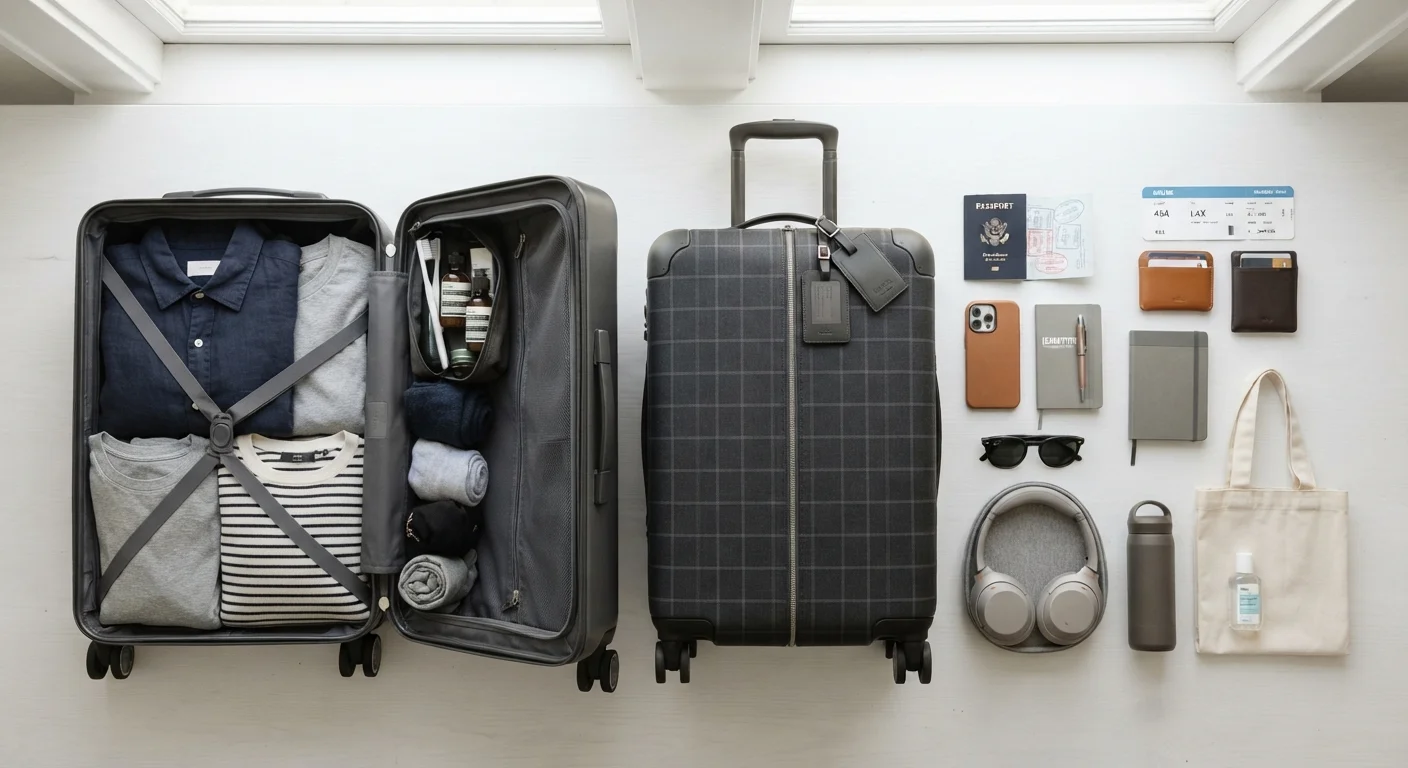
Carry-on travel compresses your airport experience considerably. No checked bag means no bag drop line, no waiting at the carousel after landing, and no risk of your luggage arriving on a different flight than you did. For short trips or tight connections, that time savings is real and meaningful.
The trade-off is that carry-on travel demands planning. Liquids must follow TSA's 3-1-1 rule (containers of 3.4 ounces or less, in a single quart-sized bag). Overhead bin space fills quickly on busy flights, and gate-checking - where an airline takes your bag at the door and loads it below - can erase some of the time advantages you were counting on.
Checked baggage removes most of those constraints. You can pack freely, bring full-size toiletries, and not spend mental energy puzzle-fitting everything into a 22-inch bag. But you're trading that freedom for time spent waiting - and for the low but real possibility that your bag doesn't arrive with you. U.S. airlines mishandled approximately 2.9 bags per 1,000 passengers in a recent reporting period, according to the Bureau of Transportation Statistics.
Gate-Checking: A Middle Ground With Caveats
Gate-checking - surrendering your carry-on at the jet bridge when bins are full - is common on smaller regional aircraft, which have very limited overhead storage. Unlike a full checked bag, gate-checked items are typically returned at the jet bridge on arrival rather than the baggage carousel. However, some airlines do route gate-checked bags to baggage claim, especially on connecting flights, which can eliminate the time advantage. If you're planning around carry-on only, it's worth checking the aircraft type for your specific route.
Pros and Cons at a Glance
Both strategies have genuine strengths and genuine drawbacks. The right choice depends on what you value most on any given trip.
Saves money on most full-service airline routes
Carry-on bags are included in standard fares on most major U.S. carriers, making them the default cost-efficient choice for frequent travelers who fly often.
Faster airport experience from curb to gate
Skipping bag drop and baggage claim can save 30 to 60 minutes on each end of a trip - a meaningful gain on tight connections or short turnaround travel.
Eliminates risk of lost or delayed luggage
Keeping your bag in the cabin means it arrives with you, removing one of the most frustrating variables in air travel.
Checked bags offer unrestricted packing freedom
Full-size toiletries, bulkier clothing, and gear that can't fit overhead all travel easily when checked, reducing pre-trip stress significantly.
Checked bags reduce mental load during the journey
Without worrying about overhead bin space or liquid limits, you can focus on the trip rather than the logistics of fitting everything into a smaller bag.
Carry-on keeps you nimble between destinations
For multi-city itineraries, a single carry-on gives you the flexibility to move quickly without coordinating large luggage between hotels or transport hubs.
Checked bag fees add up across multiple trips
At $30-$40 each way on many U.S. carriers, a round-trip checked bag can cost $60-$80 - and those fees multiply quickly for frequent travelers or families.
Carry-on requires strict packing discipline
Size and weight limits, liquid restrictions, and limited space mean carry-on travel demands real planning and often forces trade-offs on what you bring.
Overhead bin space is not guaranteed
On full flights, bins fill quickly and gate-checking becomes likely - erasing the time savings carry-on travel is supposed to provide.
Checked baggage can be delayed, damaged, or lost
Though mishandling rates have improved, bags still go missing or arrive damaged with enough regularity that it's a genuine risk worth factoring in.
Budget fares may charge for carry-ons too
Many low-cost U.S. carriers charge for overhead bin bags, meaning neither carry-on nor checked baggage is free - the cheapest option becomes a personal item only.
Longer wait times with checked baggage
Bag drop queues before departure and carousel waits after landing can add 30 minutes or more to your airport time on each end of a trip.
When Each Strategy Makes the Most Sense
Carry-on only is a strong fit for weekend trips, business travel, and frequent flyers who've developed an efficient packing system. If you're moving through multiple cities quickly, skipping bag check entirely gives you real agility. For help building a system that works without overstuffing, a structured carry-on packing method can make the discipline feel manageable.
Checked baggage makes more sense for trips lasting more than a week, family travel with children, cold-weather or outdoor trips requiring bulky gear, and any destination where you're uncertain about access to laundry. It also becomes more justified when your airline fare already includes a free checked bag - in that case, declining it doesn't save you anything.
Your choice of bag also matters beyond size. If you do check luggage regularly, the construction of your suitcase affects how well it holds up to handling. Hard-shell vs. soft-shell luggage is a separate decision worth making deliberately, not by default.
Finally, consider how your baggage strategy interacts with the broader shape of your trip. Solo travel versus group tours involves different logistics - organized tours often handle luggage transfers, which changes the carry-on calculus entirely.