

Key Takeaways
Our Verdict
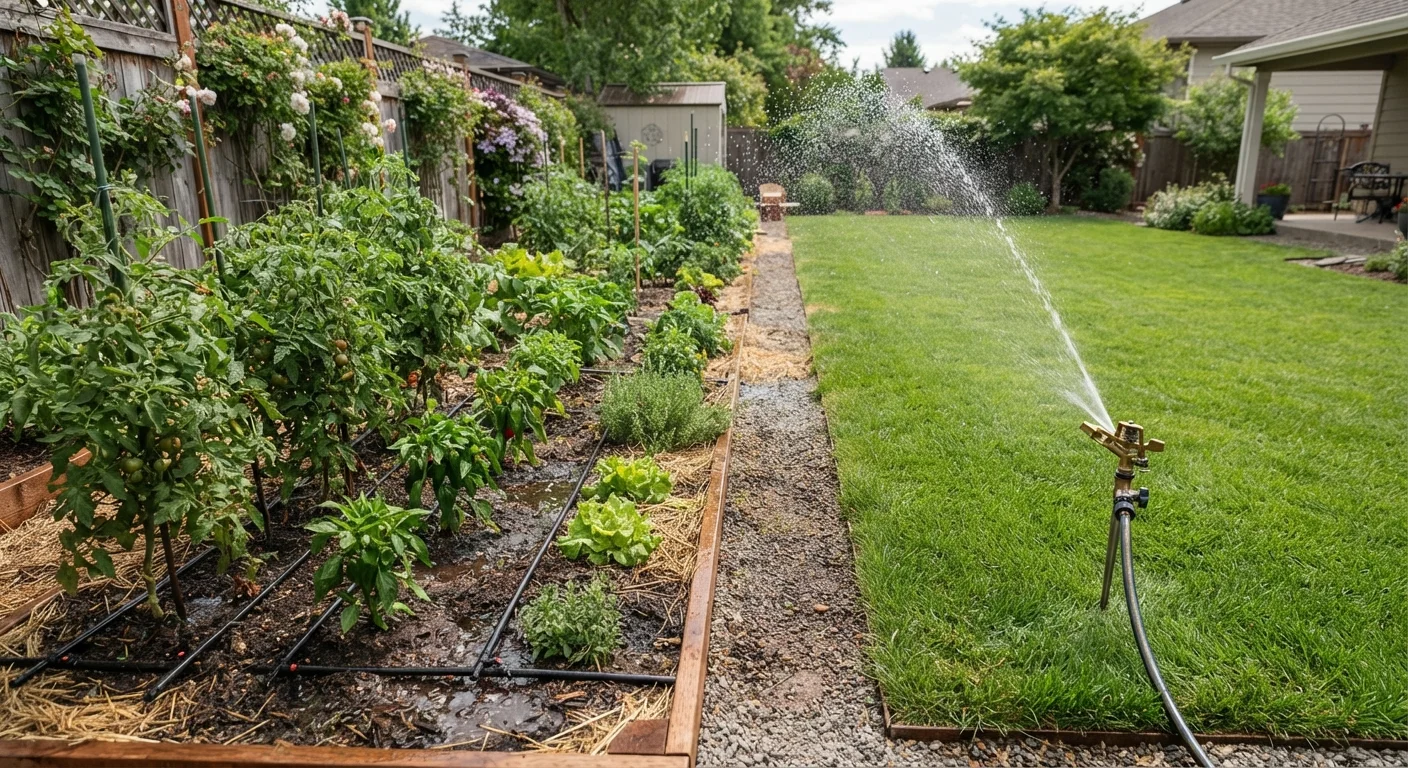
Drip irrigation is the stronger choice for water conservation, vegetable gardens, and established shrub beds, delivering targeted moisture where plants need it most. Sprinkler systems remain practical for lawns, ground covers, and large open planting areas where broad, even coverage matters more than precision. Many homeowners benefit from using both systems in different zones of their yard.
| Best for | Recommended |
|---|---|
| Vegetable gardens, raised beds, and water-conscious gardeners | Drip irrigation |
| Lawns and large, uniformly planted areas | Sprinkler systems |
| Gardeners in areas with wind, drought restrictions, or sandy soil | Drip irrigation |
| Those prioritizing quick, simple setup for broad coverage | Sprinkler systems |
How Each System Works
Understanding the core mechanics of each system helps clarify why they perform so differently in practice.
Drip irrigation delivers water slowly and directly to the root zone through a network of tubing and small emitters placed at or just below soil level. Water seeps into the ground where plants actually absorb it, with very little wasted to runoff or evaporation. This approach pairs naturally with the principles covered in our guide to deep, infrequent watering - both methods encourage roots to grow downward rather than staying shallow.
Sprinkler systems distribute water through pressurized heads that spray outward and upward, simulating rainfall over a defined area. They cover ground quickly and uniformly, making them well-suited to lawns and densely planted spaces where precise targeting isn't practical.
| Drip Irrigation | Sprinkler Systems | |
|---|---|---|
| Water efficiency | High - targets root zone directly | Moderate - loses water to evaporation and wind |
| Coverage area | Best for defined beds and rows | Best for lawns and large open areas |
| Installation complexity | Moderate - requires emitter placement | Low to high - portable to in-ground options |
| Foliage wetting | Minimal - keeps leaves dry | High - wets entire plant surface |
| Maintenance demands | Emitter flushing, filter cleaning | Head alignment, coverage checks |
| Best plant types | Vegetables, shrubs, perennials | Lawns, ground covers, dense annual beds |
Water Efficiency and Plant Health
Water use is one of the most meaningful differences between these two approaches. Drip systems are widely recognized as more efficient - water goes directly to the root zone, bypassing foliage and the bare soil between plants. This also helps reduce foliar diseases, like powdery mildew and blight, that thrive when leaves stay wet.
Sprinklers wet an entire area indiscriminately, including spaces between plants where moisture feeds weeds rather than your garden. In windy conditions or during midday heat, a significant portion of sprinkler water evaporates before reaching the soil at all.
Match Emitter Flow Rate to Soil Type
In sandy or fast-draining soils, use higher-flow emitters so water penetrates before running off laterally. In clay-heavy soils, low-flow emitters allow water to absorb slowly without pooling at the surface. Most emitters are labeled by gallons-per-hour output, making it easy to choose the right rate for your conditions.
If you're choosing between these systems for a vegetable garden or a mixed shrub-and-perennial bed, drip tends to produce healthier plants with less water. For lawns and ground covers, where you genuinely need uniform surface moisture, sprinklers remain the practical standard. Consider how your plant mix - whether annuals, perennials, or both - affects those moisture needs; our article on annual vs. perennial plant planning can help you think through the right approach.
Installation, Cost, and Maintenance
Both systems involve some upfront investment of time and money, but they differ considerably in complexity.
Drip systems typically start with a mainline hose connected to an outdoor spigot, with smaller distribution tubing and emitters branching off to individual plants. Kits are available for small gardens, and the components can be expanded or reconfigured as your garden evolves. The trade-off is setup precision - emitters need to be positioned correctly, and they can clog over time if your water supply carries sediment. A filter at the water source and occasional flushing of the lines keeps them running well.
Sprinkler systems range from portable hose-end sprinklers to in-ground systems with automatic timers and multiple zones. In-ground systems typically require trenching and may need a licensed irrigation professional depending on local codes - always verify local permit and licensing requirements before beginning any underground work. Portable sprinklers are straightforward but demand manual management. Head wear, clogging, and coverage gaps are the most common maintenance issues.
For seasonal upkeep of either system - including winterization to prevent pipe damage - the winter garden preparation checklist offers practical guidance.
Up to 50%
Water savings with drip vs. sprinkler
The US Environmental Protection Agency notes that drip irrigation can use up to 50% less water than conventional sprinkler systems in comparable garden settings.
30-50%
Outdoor water use share for irrigation
According to EPA WaterSense program data, outdoor irrigation accounts for roughly 30-50% of household water use in the US, making system efficiency a meaningful factor in overall consumption.
Choosing the Right System for Your Garden
Most home gardens aren't one-size-fits-all, and the irrigation decision rarely needs to be either. A raised vegetable bed alongside a lawn, for instance, is a common scenario where drip and sprinkler zones each serve a distinct purpose. If you're working with raised beds vs. in-ground planting, the confined growing area of a raised bed makes drip tubing especially effective and easy to configure.
Consider these practical factors when making your decision:
- Garden size and shape: Narrow or irregularly shaped beds favor drip; large, open rectangles suit sprinklers.
- Plant types: Vegetables, fruit, shrubs, and established perennials benefit most from drip. Lawns and annual flower beds planted close together work well with sprinklers.
- Local water restrictions: Many US municipalities impose watering restrictions during dry months. Drip systems often qualify for exemptions because of their efficiency - check with your local utility or water authority.
- Your schedule: Both systems can be automated with timers, but drip requires less frequent monitoring once set up correctly.
Whatever system you choose, the goal is consistent, appropriate moisture delivered where roots can use it - not just wet soil on the surface.