

Key Takeaways
Option A
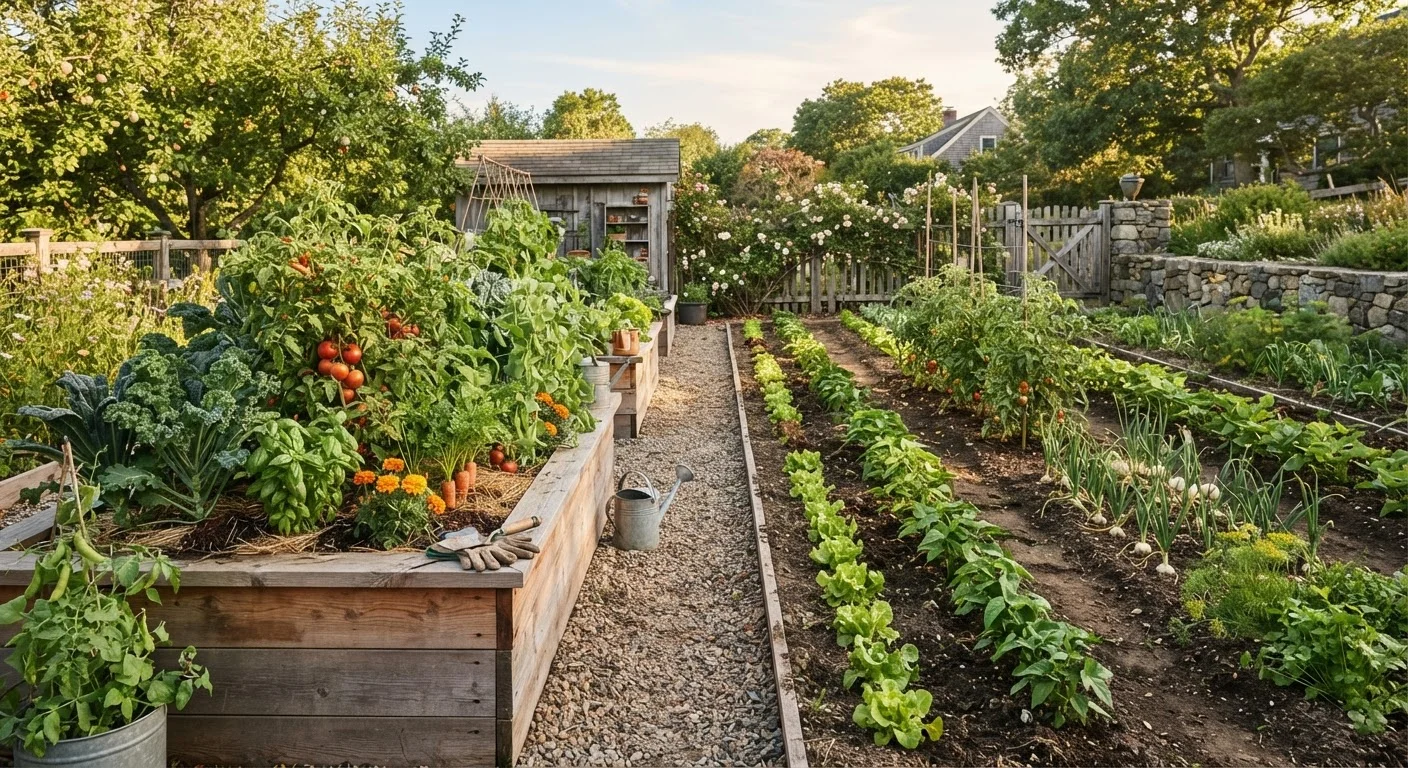
Raised Beds
The controlled, high-productivity growing environment.
Best for: Gardeners dealing with poor native soil, limited space, or physical accessibility challenges who want fast results.
Option B
In-Ground Planting
The traditional, expansive, and low-cost approach.
Best for: Gardeners with large planting areas, workable native soil, and a long-term investment mindset.
If your native soil is heavy clay, compacted, or contaminated
Raised Beds
Raised beds let you bypass problem soil entirely by filling with a custom growing mix, giving roots the loose, well-drained environment they need from day one.
If you're gardening on a tight budget and have a large area to plant
In-Ground Planting
In-ground gardening costs very little to start beyond soil amendments, making it far more economical when covering a significant planting area.
If you have limited mobility or back or knee problems
Raised Beds
A raised bed built at 24-30 inches high can be worked while seated or standing upright, significantly reducing physical strain.
If you're growing large perennials, fruit trees, or sprawling crops
In-Ground Planting
Deep-rooted and wide-spreading plants thrive with unrestricted soil depth and lateral room that in-ground plots naturally provide.
If you want precise control over watering and soil nutrition
Raised Beds
The contained environment makes it straightforward to tailor amendments, monitor moisture levels, and install targeted drip irrigation more efficiently.
Soil Control and Quality
Soil quality is often the single most important factor separating a thriving garden from a frustrating one. Raised beds give you complete authority over what goes into the growing medium. You fill them from scratch with a blend typically combining topsoil, compost, and a drainage component such as coarse sand or perlite - bypassing whatever native conditions your yard presents. This is a significant advantage if you live on compacted suburban soil, heavy clay, or land with a history of chemical treatment.
In-ground planting, by contrast, means working with what's already there - and improving it over time. This isn't a weakness if your native soil is sandy loam or well-draining and nutrient-rich, but most US homeowners inherit soil that needs amendment. Tilling in compost, aged manure, and organic matter across multiple seasons gradually builds fertility. For gardeners interested in sustainable soil building, the long game of organic soil improvement can ultimately produce a living soil ecosystem that a filled raised bed takes years to replicate.
The key difference: raised beds let you start right; in-ground planting lets you grow deep - literally and ecologically.
Cost, Setup, and Scalability
Upfront costs vary considerably between the two methods. Building a single 4×8-foot raised bed requires framing material (commonly untreated cedar or pine), hardware, and a substantial volume of fill mix. Costs for a single bed often range from $100 to $300 or more, depending on material choices and local soil mix pricing. Scaling to multiple beds multiplies that investment quickly.
In-ground gardening, by comparison, has a much lower barrier to entry. Beyond basic tools and soil amendments - bags of compost, lime if needed, or a cover crop seed mix - the earth is already there. For a beginning gardener exploring the basics, our guide to starting a vegetable garden from scratch walks through site preparation without requiring raised bed infrastructure.
| Criterion | Raised Beds | In-Ground Planting |
|---|---|---|
| Upfront cost | Higher ($100-$300+ per bed) | Lower (amendments only) |
| Soil control | Complete - fill from scratch | Limited by native conditions |
| Drainage | Excellent; dries out faster | Variable; can be slow |
| Season length | Longer - warms up earlier | Standard to your climate |
| Weed pressure | Generally lower | Higher without heavy mulching |
| Scalability | Costly to scale widely | Very economical at scale |
| Deep-rooted crops | Limited by bed depth | Unrestricted root depth |
| Physical accessibility | Excellent at raised height | Requires bending or kneeling |
Where raised beds recoup cost is in productivity per square foot. Denser planting, better drainage, and season extension through faster spring warm-up can translate into meaningful yield advantages in a small footprint. In-ground plots shine when you need to cover large areas economically.
Maintenance, Drainage, and Season Length
Raised beds drain faster than in-ground plots - a benefit after heavy rainfall but a challenge during dry spells, since the contained soil dries out more quickly and needs more frequent watering. Pairing raised beds with efficient drip irrigation is one of the most effective ways to manage this, delivering moisture directly to root zones with minimal waste.
In-ground gardens generally retain moisture longer, especially in clay-heavy soils, but this creates its own challenge: poor drainage and root rot risk in wet conditions. Raised beds also warm up two to four weeks earlier in spring due to their exposure on all sides, giving cool-season crops a meaningful head start in northern US climates.
2-4 weeks
Earlier spring planting potential with raised beds
Raised bed soil warms significantly faster in spring than ground-level soil, as cited by cooperative extension research from multiple US universities.
Up to 4x
Yield per square foot vs. traditional rows
Intensive planting in raised beds, as described in Square Foot Gardening methodology, can produce substantially more per unit area than conventional row planting.
Weed pressure is another practical difference. Raised beds, especially when topped with mulch and started with weed-free fill, typically experience far fewer weed intrusions than in-ground plots where dormant weed seeds are abundant in native soil. Over time, in-ground beds improve with consistent mulching and the use of ground covers or companion planting strategies that suppress weeds naturally.
Choosing the Right Fit for Your Garden
Neither approach is the single right answer - the decision comes down to your specific conditions. Ask yourself four questions: What is my native soil like? How much space am I working with? What is my physical comfort level when bending or kneeling? And what is my starting budget?
Gardeners with small, awkward lots or contaminated urban soil almost always benefit from raised beds. Those with larger yards, workable ground, and plans to grow perennials, fruit trees, or deep-rooted crops will find in-ground planting more practical and cost-effective at scale. Some gardeners combine both - using raised beds for intensive vegetable production and reserving in-ground space for perennials and sprawling plants.
If your space is very small or you're gardening on a hard surface, a third path - container growing - is worth considering. Our guide to growing herbs on a patio or balcony covers how much is achievable in a compact footprint. And once your planting method is settled, thinking through your annual versus perennial plant mix will shape how your garden evolves and what ongoing effort it demands year to year.