

Key Takeaways
Start here
Choosing the Right Location
Next
Planning Your Garden Layout
Then
Preparing the Soil
Build on it
Selecting and Planting Your Vegetables
Keep it growing
Watering, Feeding, and Early Care
Look ahead
Planning Ahead: Composting and Seasonal Transitions
Choosing the Right Location
The single most consequential decision you'll make is where to put your garden. Vegetables are sun-hungry plants - most varieties need a minimum of six full hours of direct sunlight each day, and fruiting crops like tomatoes, peppers, and squash perform best with eight or more. Before you dig anything, spend a day watching how light moves across your yard and identify your sunniest, most consistently lit patch.
Beyond sunlight, consider proximity to water. Hauling a hose long distances every other day becomes a real obstacle. Choose a location within reach of an outdoor spigot or where you can lay a soaker hose or drip line. Also look at drainage - avoid low-lying spots that collect standing water after rain, as waterlogged roots are a fast path to plant failure.
Test Your Sun Before You Commit
Before building or buying anything, take a day to photograph your candidate spot every two hours from morning to late afternoon. This gives you a clear visual record of how many hours of direct light it actually receives. Misjudging sun availability is one of the most common - and most avoidable - beginner mistakes.
If you're working with a small outdoor space, don't overlook containers and patios. Our guide on growing herbs on a patio or balcony shows how much you can grow even without a yard.
Planning Your Garden Layout
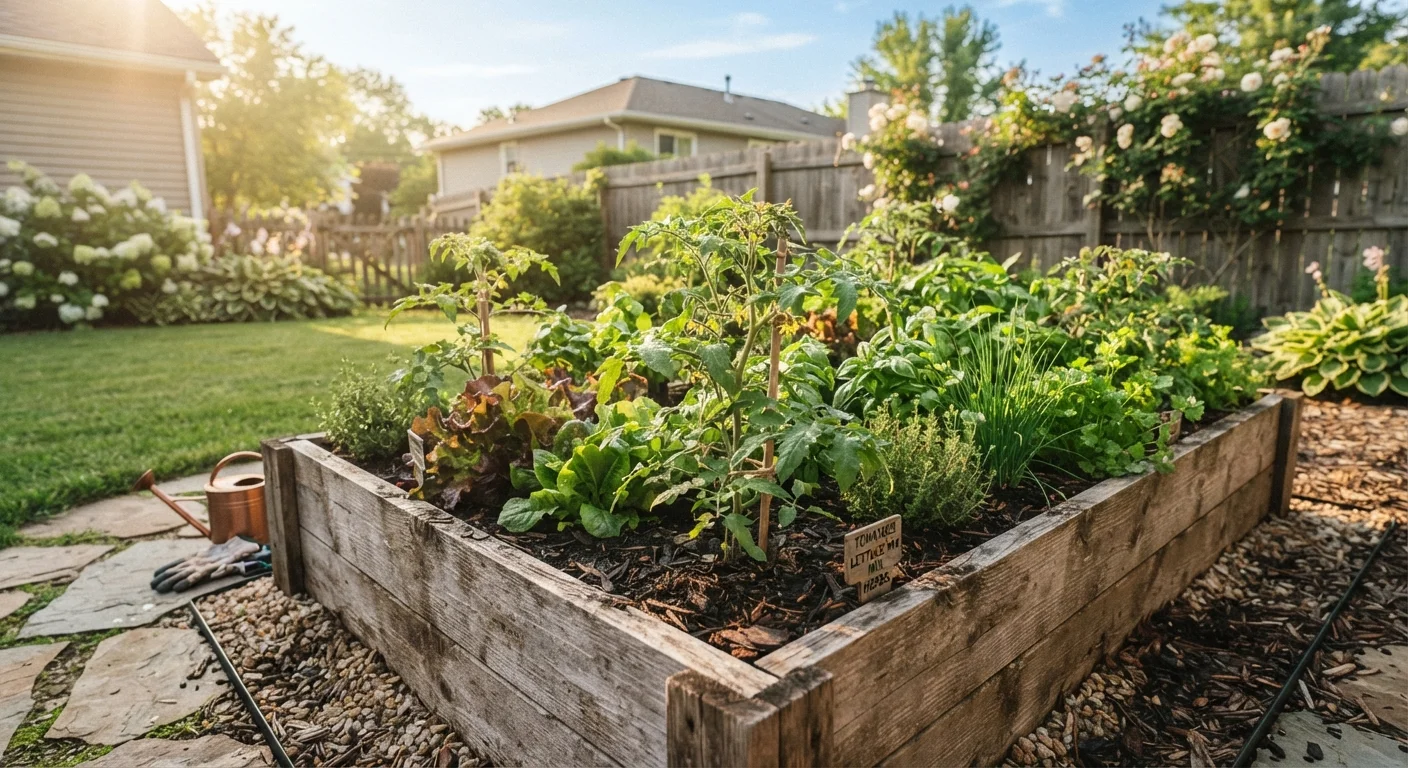
Resist the urge to go big in year one. A 4×8 foot raised bed or an equivalent in-ground plot gives you enough space to grow a genuine variety of vegetables without becoming overwhelming to maintain. You can always expand once you've learned how your space and schedule interact with the demands of a garden.
Sketch your layout before you plant. Place taller plants - like staked tomatoes or trellised beans - on the north side of the bed so they don't shade shorter crops. Group vegetables with similar water and sun needs together. Leave clear walking access so you can reach every plant without stepping on the soil, which compacts it over time.
USDA Hardiness Zone
A geographic system that divides the US into regions based on average minimum winter temperatures, helping gardeners choose plants likely to survive and thrive locally.
Last frost date
The average calendar date after which freezing temperatures are unlikely in a given area - a key benchmark for deciding when to plant warm-season crops outdoors.
Transplant
A young seedling started elsewhere (often a nursery) and moved into your garden, giving you a head start compared to growing from seed in place.
Compost
Decomposed organic material - such as food scraps and yard waste - that is added to soil to improve its structure, fertility, and moisture retention.
Soil pH
A measure of how acidic or alkaline your soil is, rated on a scale from 0 to 14. Most vegetables grow best in slightly acidic to neutral soil, between pH 6.0 and 7.0.
Raised bed
A contained planting area built above the ground level, usually framed with wood or other materials, filled with a controlled growing mix rather than native soil.
Direct sowing
Planting seeds directly into the garden bed where they will grow, rather than starting them indoors or in trays first.
Cool-season crop
Vegetables that grow best in mild temperatures and can tolerate light frost, such as lettuce, peas, and spinach - typically planted in early spring or fall.
Preparing the Soil
Soil quality determines how well your plants grow more than almost any other factor. Ideal vegetable garden soil is loose, dark, and rich in organic matter - it should feel crumbly rather than sticky or powdery. Before planting, have your soil tested through your local Cooperative Extension Service to understand its pH and nutrient levels. Most vegetables prefer a pH between 6.0 and 7.0.
If you're starting in native ground, loosen the top 12 inches with a garden fork or tiller, then work in a generous layer of compost - at least two to four inches. If your native soil is heavy clay or sandy and nutrient-poor, a raised bed filled with a quality planting mix (typically a blend of topsoil, compost, and other organic material) is often the more practical starting point for beginners.
Selecting and Planting Your Vegetables
Choose crops that match your climate, available space, and what your household actually eats. For most first-time gardeners in the US, a combination of cool-season crops (lettuce, spinach, peas, radishes) and warm-season crops (tomatoes, zucchini, green beans, cucumbers) covers a long and productive growing window.
Check your USDA Hardiness Zone and your region's average last frost date before planting. Cool-season crops go in a few weeks before the last expected frost; warm-season crops wait until frost risk has passed and soil has warmed. Transplants are a convenient starting point for slow-growing crops, while beans, peas, and root vegetables are better sown directly from seed into the bed.
Plant at the depth and spacing listed on the seed packet or transplant tag - crowding plants is one of the most common beginner mistakes and reduces air circulation, inviting disease.
Watering, Feeding, and Early Care
Most vegetable gardens need roughly one inch of water per week. Water deeply and infrequently to encourage roots to grow downward rather than staying shallow. A simple way to check: push your finger an inch into the soil. If it feels dry, water thoroughly. Morning watering is preferred because foliage has time to dry before evening, reducing the risk of fungal problems.
Feed your vegetables with a balanced, general-purpose fertilizer according to package instructions - over-fertilizing, particularly with nitrogen-heavy products, can produce lush leaves at the expense of fruit. Keep on top of weeds, which compete aggressively for water and nutrients, especially in the first weeks after planting. Pulling them while small is far easier than tackling established ones.
Mulching Saves Time and Water
Applying a two- to three-inch layer of straw or wood chip mulch around your vegetable plants can significantly reduce how often you need to water by slowing soil moisture evaporation. Mulch also suppresses weeds and moderates soil temperature. It's one of the simplest, most effective habits to adopt from the beginning of your first season.
Planning Ahead: Composting and Seasonal Transitions
A first garden is the beginning of a longer relationship with your outdoor space. As you harvest and clear spent plants, think about building a compost system to recycle kitchen scraps and garden waste back into your soil. Our complete composting guide walks you through every step, from setting up a pile to using finished compost effectively.
As the growing season winds down, proper garden prep helps your space recover and thrive the following year. Our winter preparation checklist covers everything from protecting soil structure to storing tools properly before cold weather arrives. Building these habits from your very first season makes each subsequent year a little easier and more productive.