

Key Takeaways
Option A
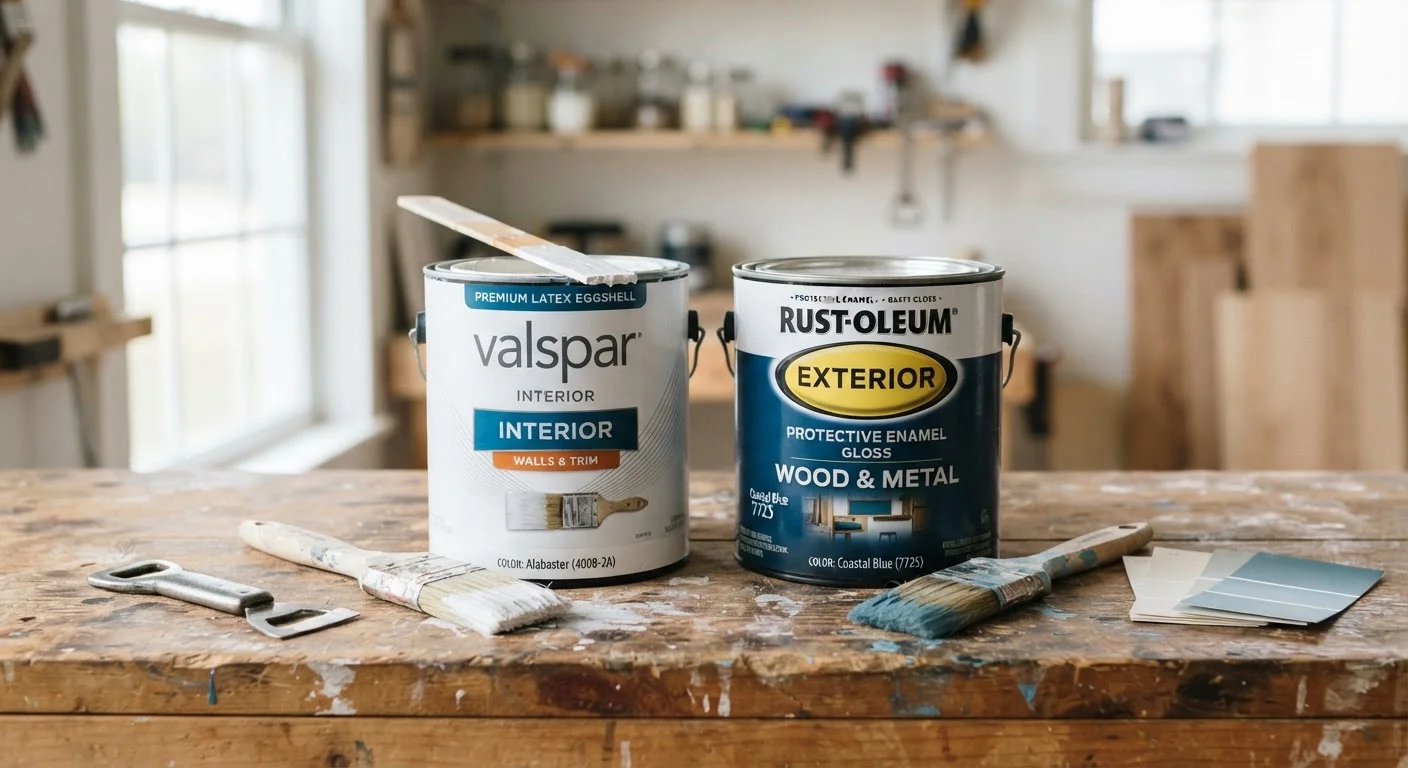
Interior Paint
Formulated for indoor air quality, washability, and color stability.
Best for: Walls, ceilings, and trim inside the home where UV exposure and moisture are limited.
Option B
Exterior Paint
Engineered to withstand weather, UV rays, and temperature swings.
Best for: Siding, trim, fences, and any surface exposed to outdoor conditions year-round.
If you're painting any room inside your home
Interior Paint
Interior paint is formulated to minimize VOC off-gassing and withstand regular cleaning, making it the safe, practical choice for living spaces.
If you're painting siding, exterior trim, or outdoor structures
Exterior Paint
Exterior paint contains UV-resistant pigments and flexible resins built to handle rain, heat, and freeze-thaw cycles that would quickly destroy interior formulas.
If you're painting a covered porch floor or open garage interior
Exterior Paint
These transitional spaces face moisture and temperature variation similar to outdoor conditions, so exterior-grade durability is warranted even if the surface is technically indoors.
If you want vibrant, true color indoors with low odor
Interior Paint
Interior paints are color-matched and stabilized for consistent indoor lighting and don't require the heavy mildewcide additives found in exterior formulas.
What's Actually Different Inside the Can
At a glance, interior and exterior paints can look nearly identical - same sheens, similar color ranges, comparable price points. But their formulations diverge significantly at the chemical level, and those differences have real consequences for performance.
The key distinction lies in the resin, which is the binder that holds pigment to a surface once the paint dries. Interior paints use rigid, hard-drying resins that resist scuffs and allow surfaces to be wiped clean repeatedly. Exterior paints use softer, more flexible resins - often acrylic-based - that expand and contract with temperature changes without cracking.
Exterior paints also contain UV-stabilizing pigments and mildewcides (fungicides added to prevent mold and mildew growth). Those additives are effective outdoors but unnecessary - and potentially problematic - in enclosed living spaces. Interior paints, meanwhile, are engineered to meet stricter VOC (volatile organic compound) limits, since indoor air quality matters far more when windows aren't always open.
| Criterion | Interior Paint | Exterior Paint |
|---|---|---|
| Resin type | Rigid, hard-drying | Flexible, elastic |
| UV resistance | Minimal | High - UV-stabilized pigments |
| Mildewcides | Rarely included | Commonly included |
| VOC levels | Low to zero-VOC options common | Generally higher VOCs |
| Washability | Excellent - designed for scrubbing | Good, but not primary focus |
| Weather durability | Not rated for outdoor use | Rated for rain, heat, freeze-thaw |
| Color stability indoors | Excellent under artificial light | Can appear different indoors |
| Typical lifespan (correct use) | 5-10 years on interior walls | 5-10 years on exterior surfaces |
What Goes Wrong When You Mix Them Up
The consequences of using the wrong paint in the wrong location aren't always immediate, but they're predictable - and costly to fix.
Exterior paint used indoors presents the most serious concern. The mildewcides and plasticizers in exterior formulas continue off-gassing in enclosed spaces long after drying. Prolonged exposure to these compounds in poorly ventilated rooms is a health concern. The paint may also remain tacky longer and feel different underfoot or to the touch.
Interior paint used outdoors is less of a safety issue but a significant durability one. Without UV inhibitors or flexible resins, interior paint exposed to sunlight will fade noticeably within one to two seasons. Moisture causes bubbling; temperature swings lead to cracking and peeling. This is one of the most common reasons homeowners end up repainting far sooner than expected. For a deeper look at why paint fails on walls, see our guide on why painted walls peel.
Don't Forget: Primers Follow the Same Rules
Interior and exterior primers are formulated differently for the same reasons as finish coats. An interior primer doesn't provide the moisture barrier and adhesion characteristics needed outdoors, while exterior primers may off-gas compounds unsuitable for enclosed spaces. Always select your primer to match the environment where it will cure and remain - not just what's most convenient to grab.
The same logic applies to primers. Using an interior primer under exterior topcoat - or vice versa - undermines the adhesion and performance of even the best finish coat. Always match your primer to the environment, not just the topcoat.
Gray Areas: Transitional Spaces and Special Situations
Not every surface falls neatly into an indoor or outdoor category. Covered porches, attached garages, mudrooms with exterior doors, and basement stairwells all occupy a gray zone that requires more careful judgment.
As a general rule: if a surface is regularly exposed to moisture, temperature extremes, or direct sunlight - even partially - treat it as an exterior surface when choosing paint. A front porch ceiling, for example, may be sheltered from direct rain but still experiences humidity and temperature swings that will degrade interior paint quickly.
Conversely, a fully enclosed sunroom with insulated windows and climate control behaves more like an interior space, even though it's structurally an addition. Interior paint is usually appropriate there, especially if you want better color fidelity and lower odor.
If you're also thinking through how color choices interact with natural light in these transitional spaces, our article on how sunlight direction influences decor choices offers useful guidance alongside your paint selection process.
Choosing the Right Product: Practical Guidance
Once you've confirmed which type of paint a surface calls for, a few additional factors guide your selection:
- Sheen level: Higher sheens (semi-gloss, gloss) are more moisture-resistant and easier to clean. They're practical for kitchens, bathrooms, and exterior trim. Flat finishes work well on interior ceilings and low-traffic walls but show dirt more easily outdoors.
- VOC content: For interiors - especially bedrooms, nurseries, or spaces with limited ventilation - look for low-VOC or zero-VOC formulations. These are now widely available and perform comparably to traditional products.
- Climate considerations: If you live in a region with harsh winters, look for exterior paints rated for low-temperature application, as some formulas require warmer conditions to cure properly.
- Surface type: Wood, masonry, stucco, and fiber cement each benefit from specific primer and paint combinations. Check manufacturer guidance for compatibility before purchasing.
If you're also weighing color decisions for interior walls, our comparison of accent walls vs. full-room color can help you think through coverage scope before you buy.