

Key Takeaways
Sunlight Direction in Decor
Sunlight direction refers to which compass direction a room's primary windows face, and how that determines the quality, intensity, and colour temperature of natural light throughout the day. North-facing rooms receive cool, indirect light all day, while south-facing rooms get bright, warm light for the longest duration. East- and west-facing rooms experience dramatic swings from cool morning or warm evening light. Understanding your room's orientation helps you make smarter choices about paint colours, textiles, and reflective surfaces.
Light colour temperature is measured in Kelvin (K). North-facing daylight skews blue-cool (around 6,500K), while direct afternoon sun is warmer (closer to 3,000-4,000K). This shift affects how paint undertones appear on your walls.
Why Your Window's Compass Direction Changes Everything
Most homeowners choose paint colours by holding a small chip under a store's fluorescent lights. The result is often a colour that looks completely different once it's on the wall at home - and the culprit is almost always natural light. The direction your windows face determines not just how much light enters the room, but the quality and colour temperature of that light at every hour of the day.
This isn't a minor detail. The same cream paint can read as warm and inviting in a south-facing room and feel cold and slightly greenish in a north-facing one. Decor decisions made without accounting for orientation often lead to expensive repaints and regrettable purchases. Getting this right first is one of the most cost-effective habits you can build. If you're starting from scratch, our guide on decorating from scratch covers how orientation fits into the broader order of decisions.
North, South, East, West: What Each Orientation Delivers
North-facing rooms never receive direct sunlight in the Northern Hemisphere. The light is indirect, consistent throughout the day, and skews noticeably cool and blue. This makes colours look flatter and can make cool neutrals feel clinical. Warm undertones in paint - think yellow, red, or orange bases - help counteract this. Avoid cool greys and stark whites, which amplify the chill.
South-facing rooms enjoy direct sunlight for the longest portion of the day, and that light is warm and golden, especially in the afternoon. These rooms offer the most decorating flexibility. Cool-toned neutrals and even bold colours perform well because the warmth of the light keeps them from feeling harsh. South-facing spaces are also where fabric fading is most likely to occur over time.
East-facing rooms are flooded with bright, slightly cool morning light that softens and dims as the day progresses. They're ideal for bedrooms if you wake early, and they suit a lighter, fresher palette. By evening they can feel quite dim, so layered artificial lighting matters more here.
West-facing rooms are the inverse: quiet and somewhat flat in the morning, then dramatically warm and golden from mid-afternoon onward. Evening light in a west-facing room is intensely beautiful but can also cause glare. Warm, earthy tones work especially well, and window treatments that diffuse rather than block the afternoon sun are worth considering.
~90%
Of paint colour perception influenced by lighting
Colour scientists and paint manufacturers broadly agree that lighting conditions - natural and artificial - account for the majority of how a paint colour is perceived in a finished room.
2-4x
Faster fabric fading in direct sun rooms
Textiles in rooms with prolonged direct sunlight exposure, such as south-facing spaces, can fade significantly faster than those in indirect-light rooms, according to general guidance from textile and interior design sources.
Using Colour, Mirrors, and Fabrics Strategically
Once you know your orientation, you can make deliberate choices rather than guessing. Here's how each element responds to light direction:
Paint Colour
In north-facing rooms, lean toward warm-toned neutrals. In south-facing rooms, you have latitude to experiment - even cooler shades stay balanced. For more on how undertones interact with light, our guide to warm-toned vs cool-toned neutrals is a practical next step. If you're considering a single feature wall rather than repainting the whole room, the accent walls vs full-room colour article walks through when each approach makes sense.
Mirrors and Reflective Surfaces
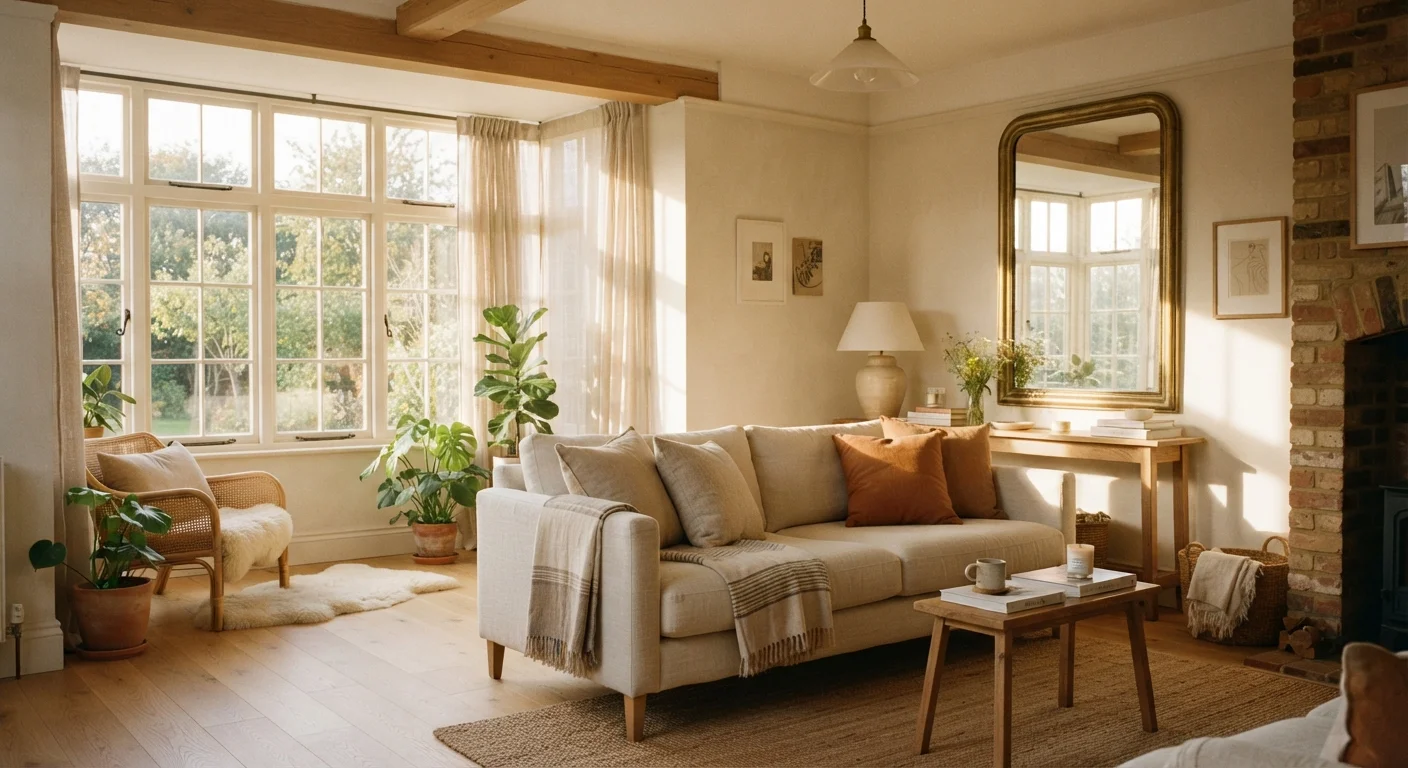
Mirrors placed opposite a window push natural light deeper into the room. In dark north-facing spaces, a large mirror on the wall directly facing the window can noticeably lift the perceived brightness. Gloss finishes on furniture and trim also reflect light, adding subtle luminosity without additional fixtures.
Fabrics and Textiles
Light-coloured, slightly textured fabrics - linen, cotton, light wool - reflect ambient light and suit dimmer rooms well. In bright south- or west-facing rooms, UV exposure is a real concern: tightly woven fabrics and those with inherent colour-fastness hold up better over years of direct sun. Sheers over windows diffuse harsh afternoon glare while preserving natural light. For small rooms dealing with these challenges, styling a small living room covers how light and layout decisions intersect.
Test Paint Samples at Multiple Times of Day
Paint a sample patch at least 12 inches square directly on your wall - not on paper or board that you move around. Observe it in the morning, at noon, and in the evening with your usual artificial lighting on. This is the only reliable way to see how the colour will actually live in your room's specific light conditions.
Common Mistakes and How to Avoid Them
The most frequent error is evaluating paint colours under artificial store lighting or in a different room altogether. Always test samples on the actual wall in your space and observe them at morning, midday, and evening. Light shifts dramatically throughout the day, and a colour that looks perfect at noon may read entirely differently at 7 p.m.
A second common mistake is assuming a dark colour will always make a low-light room feel smaller or more oppressive. In reality, a dark shade with warm undertones can create a rich, intentional atmosphere - the issue is usually undertone mismatch rather than darkness itself. Our piece on decorating myths that make rooms feel smaller addresses several related misconceptions.
Finally, don't overlook artificial lighting as a partner to natural light. In east- and north-facing rooms especially, the right combination of warm-toned bulbs and layered fixtures can bridge the gap between daytime and evening, maintaining the warmth your decor needs after sundown.