

Key Takeaways
Our Verdict
Neither lifestyle is universally superior-each involves meaningful trade-offs. Indoor living offers substantially greater safety and longevity, while outdoor access provides stimulation and natural behavior opportunities. The right choice depends on your cat's temperament, health history, your local environment, and how committed you are to enrichment or supervised access.
| Best for | Recommended |
|---|---|
| Owners prioritizing safety and longevity | Indoor lifestyle with active enrichment |
| Cats with strong roaming instincts in low-traffic rural areas | Supervised or controlled outdoor access |
| Owners wanting a middle-ground solution | Catio or leash-trained outdoor access |
| Senior or immunocompromised cats | Full indoor lifestyle |
Lifespan: What the Numbers Suggest
Lifespan differences between indoor and outdoor cats are substantial. Veterinary and animal welfare organizations generally cite average lifespans of 12-18 years for indoor cats, compared to estimates as low as 2-5 years for free-roaming outdoor cats in some urban studies-though rural outdoor cats often fare better. These figures vary widely by methodology and geography, so they should be treated as directional rather than precise.
The gap is driven largely by exposure to acute hazards: vehicle strikes, predator attacks, falls, and ingestion of poisons or toxic plants are disproportionately responsible for early mortality in outdoor cats. Indoor cats are not risk-free-obesity, stress-related illness, and dental disease are concerns-but these conditions are generally more manageable with routine veterinary care. See our senior cat care guide for how age-related needs shift regardless of lifestyle.
Health Risks: Outdoors vs. Indoors
Outdoor cats face a broader range of acute and infectious health threats. Feline leukemia virus (FeLV), feline immunodeficiency virus (FIV), and upper respiratory infections spread through contact with other cats-encounters that are nearly unavoidable outside. Intestinal parasites, fleas, ticks, and ringworm are also significantly more prevalent in cats with outdoor access.
Trauma is another major factor. Bite wounds from fights frequently abscess and can introduce serious infections. Ingestion of rodenticides, antifreeze, or toxic garden plants poses a year-round risk that is nearly impossible to monitor.
Indoor cats carry their own health vulnerabilities. Reduced physical activity contributes to obesity, which in turn elevates risk for diabetes, joint disease, and urinary tract problems. Boredom and environmental monotony can manifest as stress-related conditions including over-grooming, inappropriate elimination, and anxiety. These are real welfare concerns, not minor inconveniences. Our indoor cat enrichment guide covers practical strategies for keeping indoor cats mentally engaged.
Outdoor Access Is Not Risk-Free-Even in Quiet Areas
Many owners underestimate outdoor risks in suburban or rural settings. Rodenticides used by neighbors, antifreeze in driveways, unsecured traps, and encounters with wildlife (including coyotes) are present in many areas that appear safe. If your cat goes outdoors, discuss a prevention strategy with your veterinarian-don't assume a quiet neighborhood eliminates these hazards.
Enrichment and Behavioral Needs
Cats are predatory animals with strong instincts to hunt, climb, scratch, and explore. Outdoor access naturally satisfies many of these drives. Indoor cats require owners to deliberately provide those outlets.
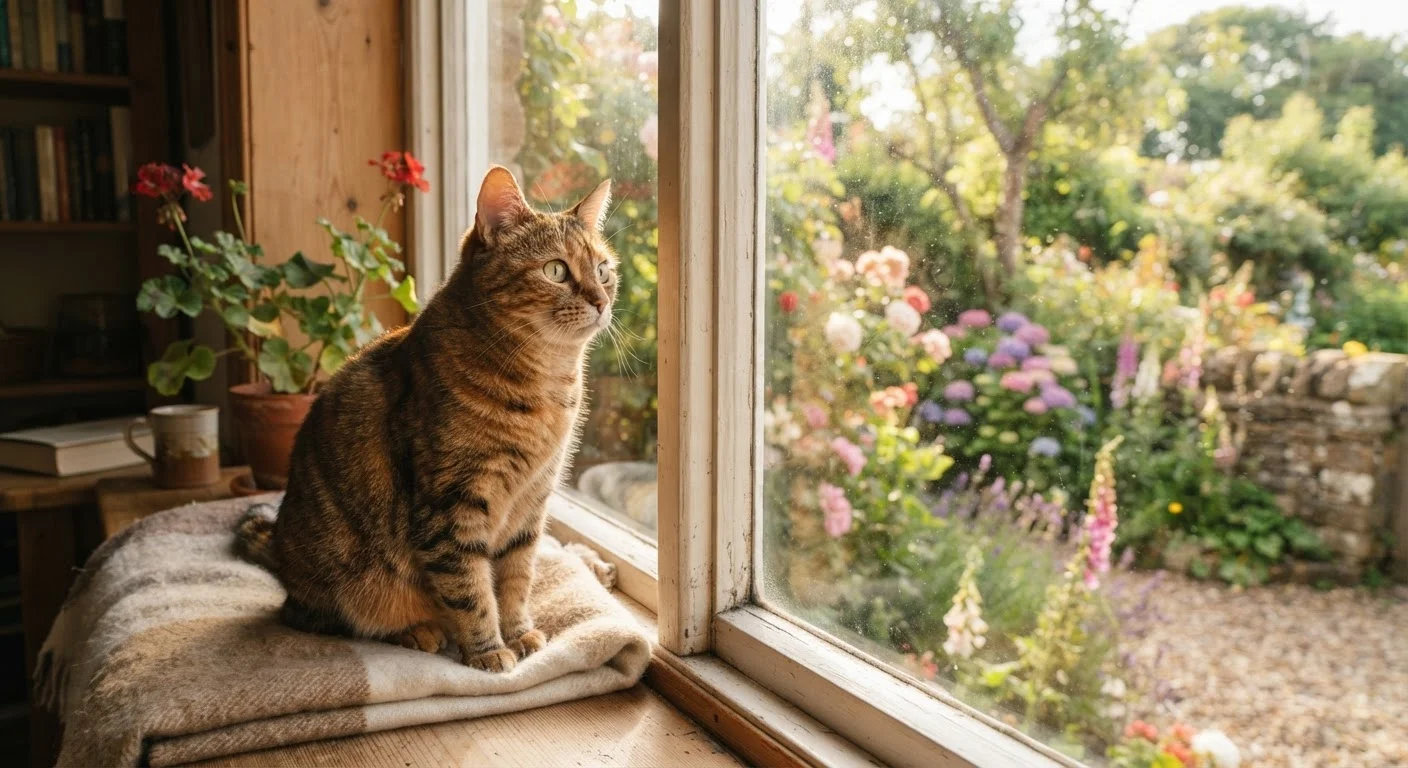
Effective enrichment for indoor cats includes climbing structures, puzzle feeders, rotating toy selection, window perches with outdoor views, and dedicated daily interactive play sessions. A well-resourced multi-cat household can also provide social stimulation, though individual temperament matters significantly.
For outdoor cats, enrichment is largely self-directed but comes with unpredictability. Cats may roam far beyond their owner's property, increasing risks that owners cannot control or even observe. A catio-an enclosed outdoor structure attached to the home-represents a genuine middle ground, providing fresh air, sunlight, and sensory stimulation while eliminating roaming hazards.
Consider a Catio or Leash Training
A catio (an enclosed outdoor enclosure) lets your cat experience fresh air, wildlife sounds, and sunlight without the hazards of free roaming. Some cats can also be successfully leash-trained using a well-fitted harness, allowing supervised outdoor exploration. Either approach requires patient introduction but can meaningfully improve an indoor cat's quality of life.
Preventive Care Responsibilities
Regardless of lifestyle, core preventive care applies to every cat: annual or biannual veterinary exams, core vaccinations, and dental monitoring. The specific priorities shift depending on outdoor access.
Outdoor cats should be current on rabies and FVRCP vaccines, and ideally FeLV vaccination if not already immune. Year-round flea, tick, and heartworm prevention is strongly recommended by most veterinarians for cats with outdoor exposure. Testing for FeLV and FIV is advisable, particularly for newly adopted cats with unknown histories.
Spaying and neutering is especially important for outdoor cats-intact cats roam farther, engage in more fights, and contribute to feral cat population growth. For indoor cats, parasite prevention remains relevant since fleas can enter homes on clothing or other pets. Diet choices also intersect with lifestyle; wet versus dry food decisions may be influenced by an indoor cat's lower activity level and hydration needs.
Comparing the Two Lifestyles
The table below summarizes key trade-offs across the most relevant dimensions. No single column is universally preferable-context and individual cat needs always apply.
| Indoor Cats | Outdoor Cats | Supervised/Catio Access | |
|---|---|---|---|
| Average lifespan | 12-18 years (estimated) | 2-5 years urban; higher rural | Varies; closer to indoor |
| Infectious disease risk | Low | High (FIV, FeLV, parasites) | Low to moderate |
| Trauma and accident risk | Low | High (traffic, predators) | Low |
| Behavioral enrichment | Requires owner effort | Largely self-directed | Mixed; both apply |
| Obesity/inactivity risk | Moderate to high | Lower | Lower than full indoor |
| Owner control over safety | High | Low | High |
| Parasite prevention need | Still recommended | Essential, year-round | Recommended |
This article is for general informational purposes only and does not constitute veterinary advice. Consult a licensed veterinarian for guidance specific to your cat's health and circumstances.