

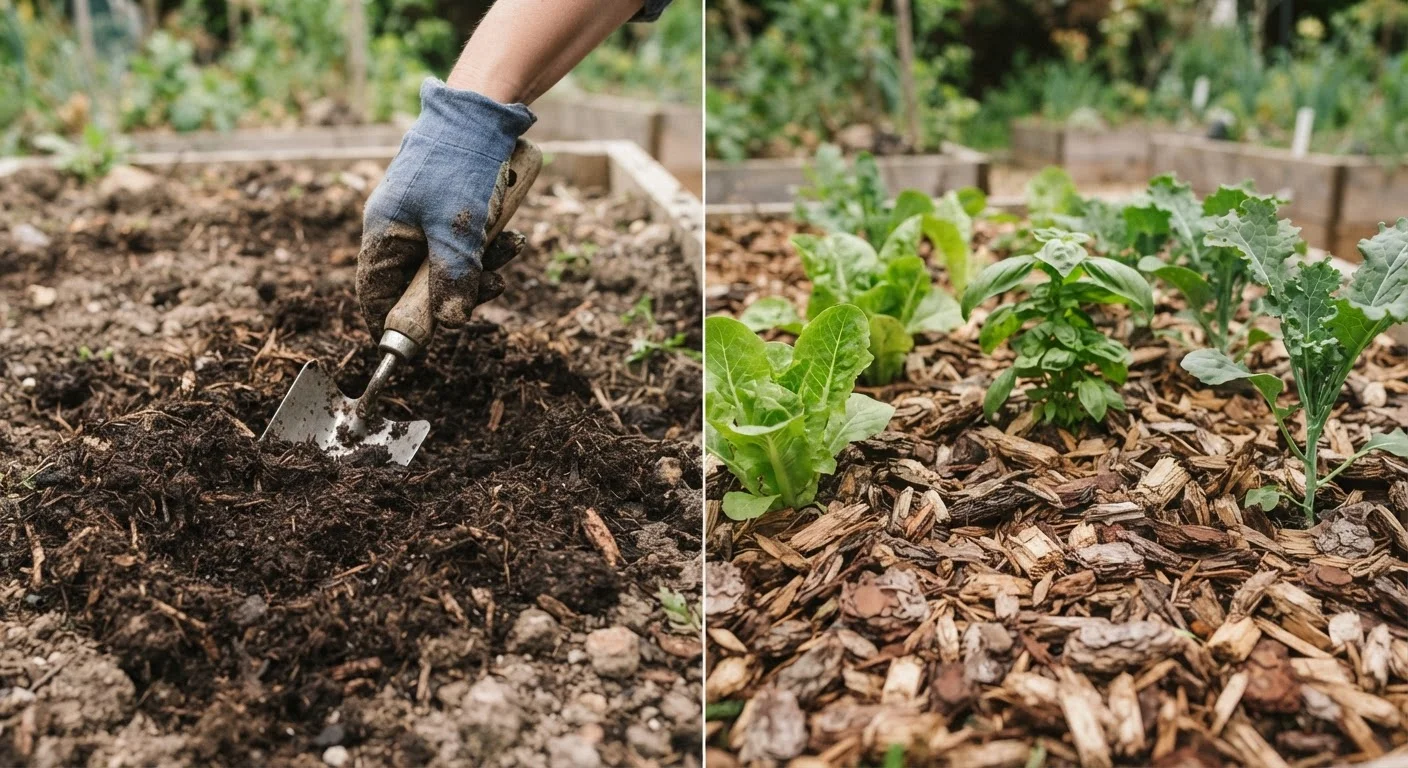
Key Takeaways
Option A
Compost
The soil builder - it feeds and improves what's underground.
Best for: Gardeners who want to enrich nutrient-depleted soil, improve its texture, and support robust long-term plant growth.
Option B
Mulch
The surface protector - it shields soil and conserves resources.
Best for: Gardeners who want to retain moisture, suppress weeds, regulate soil temperature, and reduce watering frequency.
If your soil is compacted, sandy, or nutrient-poor
Compost
Compost directly improves soil texture and provides the organic matter and nutrients that struggling soil needs most.
If you want to cut back on watering and keep weeds in check
Mulch
A 2-4 inch layer of mulch on the soil surface dramatically reduces moisture evaporation and blocks weed germination.
If you're preparing a new raised bed or planting area
Compost
Compost blended into the planting mix gives new beds the biological foundation plants need right from the start.
If you're protecting established plants through summer heat or winter cold
Mulch
Mulch insulates roots from temperature extremes and helps plants stay hydrated during stress periods.
If you want the full benefit of both soil feeding and surface protection
Both - in layers
Apply compost first, work it lightly into the top few inches of soil, then top-dress with mulch for a comprehensive approach.
What Each Material Actually Is
Despite being sold side by side at garden centers, compost and mulch are fundamentally different materials with different purposes. Mixing them up leads to wasted effort - and sometimes plant problems.
Compost is decomposed organic matter - a dark, crumbly, earthy-smelling material created when plant scraps, food waste, and other organics break down through microbial activity. It's teeming with beneficial bacteria, fungi, and micro-nutrients that improve soil biology. For a deeper look at making your own, see our complete guide to garden composting.
Mulch is a broad category of materials - wood chips, straw, shredded bark, dried leaves, or even inorganic options like gravel - spread over the soil surface in a layer. Mulch doesn't feed soil biology the way compost does. Its job is protective: reducing water loss, buffering soil temperature, and crowding out weeds.
Can You Use Compost as Mulch?
Technically yes - a thin layer of finished compost on the soil surface offers some moisture retention. However, it breaks down quickly, provides little weed suppression, and won't perform as well as dedicated mulch materials for surface protection. For best results, use each material where it's designed to work: compost in the soil, mulch on top of it.
How Compost Works in the Soil
Compost functions as a soil amendment - something you mix into existing soil to change its properties. When worked into the top 6-8 inches of a garden bed, compost does several things simultaneously:
- Improves structure: In clay soils, it breaks up compaction and improves drainage. In sandy soils, it adds body and helps retain moisture and nutrients.
- Feeds microbial life: Healthy soil is alive. Compost introduces and sustains the bacteria and fungi that make nutrients available to plant roots.
- Provides slow-release nutrients: Nitrogen, phosphorus, and potassium are present in compost, released gradually as microbial activity continues - unlike synthetic fertilizers, which deliver a quick surge and then fade.
How much to use? A general guideline is 1-3 inches worked into the top layer of soil each season, though soil tests can help you calibrate more precisely. This approach pairs well with organic practices - our article on organic gardening trade-offs covers what realistic soil health improvements look like over time.
25-50%
Reduction in soil moisture loss from mulching
Research from university extension programs consistently shows organic mulch can cut evaporative water loss from bare soil by roughly 25-50%, reducing irrigation needs.
6-8 inches
Ideal compost incorporation depth
Most cooperative extension services recommend working compost into the top 6-8 inches of soil to maximize contact with plant root zones.
How Mulch Works on the Surface
Mulch earns its place in the garden not by what it adds to the soil, but by what it prevents. Laying a 2-4 inch layer of organic mulch over bare soil creates a physical barrier that:
- Slows evaporation: Bare soil loses moisture quickly on warm days. Mulch significantly reduces how often you need to water.
- Moderates temperature: Mulch keeps soil cooler in summer and warmer in autumn - buffering the root zone from extremes that stress plants.
- Suppresses weeds: By blocking sunlight from reaching the soil surface, mulch prevents many weed seeds from germinating.
- Gradually breaks down: Organic mulches like wood chips or straw slowly decompose over one to two seasons, adding a modest amount of organic matter. This is a benefit, not a substitute for compost.
Mulch is especially valuable when preparing your garden for winter - a thick layer around perennials and shrub bases protects roots from freeze-thaw cycles.
One important caution: keep mulch a few inches away from plant stems and tree trunks. Piling mulch directly against stems - sometimes called a "mulch volcano" - can trap moisture and cause rot or disease at the base of the plant.
Using Both Together: A Layered Approach
Compost and mulch aren't competing choices - they work best as partners applied in a specific order:
- Spread 1-2 inches of finished compost over the bed surface.
- Work it lightly into the top 4-6 inches of existing soil with a fork or tiller.
- Plant or transplant as needed.
- Apply 2-3 inches of mulch over the soil surface, keeping it clear of plant stems.
This layered system feeds the soil from below while protecting it from above - the combination reduces maintenance demands considerably over the growing season.
This strategy applies equally whether you garden in traditional in-ground beds or enclosed structures. If you're deciding between those approaches, our article on raised beds vs. in-ground planting explores which setup gives you more control over soil quality from the start.
| Criterion | Compost | Mulch |
|---|---|---|
| Primary role | Amends and feeds soil | Protects soil surface |
| Where it goes | Mixed into the soil | Spread on top of soil |
| Key benefit | Improves structure & nutrients | Retains moisture, suppresses weeds |
| Typical application depth | 1-3 inches, worked in | 2-4 inches on surface |
| Breaks down into soil | Yes - that's the point | Slowly, as a secondary benefit |
| Best timing | Before planting; each season | After planting; year-round |
| Weed suppression | Minimal | Significant |
| Temperature regulation | Indirect, via soil health | Direct insulation of root zone |