

Key Takeaways
Creates a sense of visual openness and depth
Open shelves draw the eye across a wall rather than stopping it, which can make a room feel less enclosed. This effect is especially useful in living rooms where large closed units might otherwise feel heavy.
Encourages personalization and storytelling
Displayed objects - books, travel souvenirs, plants, artwork - communicate personality in ways that closed storage cannot. Shelves become a dynamic, changeable feature of the room's character.
More affordable than built-in closed cabinetry
Floating shelf systems are generally less expensive to install than full built-in units with doors. They also require less carpentry skill to update or replace as needs evolve.
Keeps everyday items accessible and in use
Items on open shelves are easier to grab and return than those behind cabinet doors. This accessibility tends to mean books get read, games get played, and objects stay in active use rather than forgotten.
Flexible and easy to reconfigure
Unlike fixed cabinets, floating shelves can be relocated, added to, or removed without major renovation. The layout can evolve as your storage needs or aesthetic preferences change.
Dust accumulates faster than in closed storage
Every surface is fully exposed to air circulation, meaning dust, pet hair, and airborne particles settle continuously. In most homes, open shelves require dusting at least every one to two weeks to stay presentable.
Clutter is immediately and always visible
There is no door to close when things get messy. Misplaced items, stray mail, or casual accumulation are always on display, which creates pressure to maintain order that closed storage removes.
Requires ongoing curation to look intentional
A styled shelf needs regular editing - objects shift, items get added without thought, and seasonal changes can make arrangements feel dated. This is a design commitment, not a one-time setup.
Can feel visually overwhelming if overfilled
Too many objects of similar size and no breathing room between groupings creates visual noise rather than interest. Getting the balance right takes practice and a willingness to remove items.
Load-bearing capacity limits what can be stored
Floating shelves have real weight limits that vary by wall anchor type and bracket strength. Heavy items like large book collections or dense ceramic pieces may require reinforced mounting or a different shelf format entirely.
Our Verdict
Open shelving in a living room offers genuine design rewards - a sense of openness, personality, and accessible storage - but those benefits come attached to a real maintenance commitment. Clutter-prone households or busy families may find that the upkeep outweighs the aesthetic appeal. For those who enjoy curating their space and can commit to regular light cleaning, open shelves can be a genuinely satisfying design choice.
Best for homeowners who enjoy decorating, have a manageable number of display items, and are willing to dust and restyle shelves every few weeks.
What Open Shelving Actually Promises
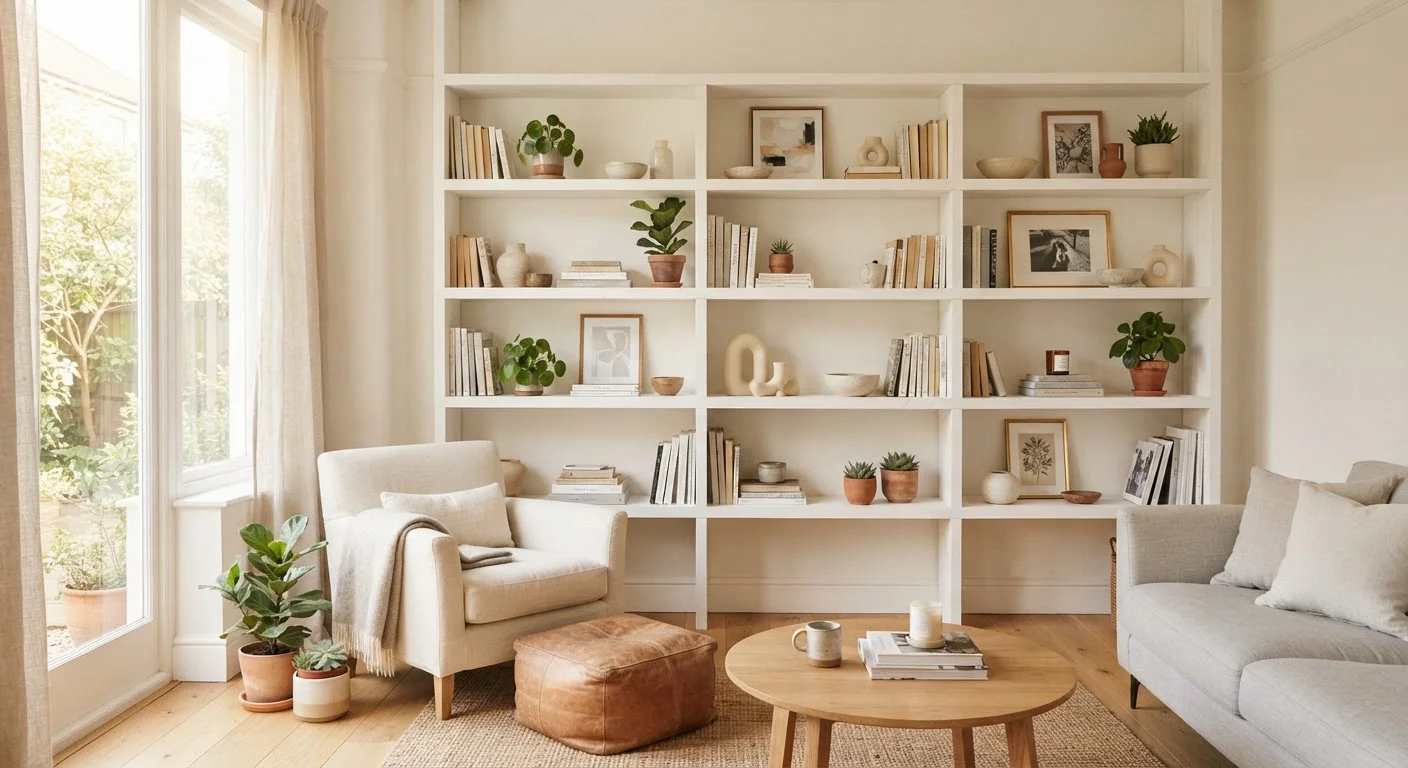
Open shelving has become one of the most photographed features in living room design - and for good reason. A well-styled shelf wall communicates personality in a way closed cabinetry simply cannot. Books, plants, ceramics, and framed photos tell a story about the people who live in the space.
But the gap between a styled photo and a lived-in room is significant. Before committing to open shelves, it helps to understand exactly what you're trading closed storage for - and what that means on an ordinary Tuesday when life is busy and surfaces are cluttered. This article walks through both sides honestly, so you can make a decision that fits your actual household rather than an idealized one.
For context on how display choices interact with perception of space, see our breakdown of common decorating myths - several assumptions about what makes rooms feel larger turn out to be wrong.
The Real Advantages
Open shelves offer advantages that go beyond aesthetics when they're approached thoughtfully.
Creates a sense of visual openness and depth
Open shelves draw the eye across a wall rather than stopping it, which can make a room feel less enclosed. This effect is especially useful in living rooms where large closed units might otherwise feel heavy.
Encourages personalization and storytelling
Displayed objects - books, travel souvenirs, plants, artwork - communicate personality in ways that closed storage cannot. Shelves become a dynamic, changeable feature of the room's character.
More affordable than built-in closed cabinetry
Floating shelf systems are generally less expensive to install than full built-in units with doors. They also require less carpentry skill to update or replace as needs evolve.
Keeps everyday items accessible and in use
Items on open shelves are easier to grab and return than those behind cabinet doors. This accessibility tends to mean books get read, games get played, and objects stay in active use rather than forgotten.
Flexible and easy to reconfigure
Unlike fixed cabinets, floating shelves can be relocated, added to, or removed without major renovation. The layout can evolve as your storage needs or aesthetic preferences change.
One often-overlooked benefit is accessibility. When books, games, and everyday objects are on open shelves rather than behind doors, household members are more likely to actually use them. Closed cabinets have a way of becoming storage graveyards. Open shelves, when well-organized, keep things in circulation.
They also give you design flexibility that built-in closed units don't. Floating shelves can be repositioned, added to, or removed entirely without major renovation. If your needs change - a new hobby, a growing book collection, a baby - the configuration adapts. For more ideas on working with limited living room space, our guide to styling small living rooms covers layout and storage principles that hold up in real homes.
The Honest Disadvantages
No design choice is without trade-offs, and open shelving carries some that deserve direct attention before you start drilling.
Dust accumulates faster than in closed storage
Every surface is fully exposed to air circulation, meaning dust, pet hair, and airborne particles settle continuously. In most homes, open shelves require dusting at least every one to two weeks to stay presentable.
Clutter is immediately and always visible
There is no door to close when things get messy. Misplaced items, stray mail, or casual accumulation are always on display, which creates pressure to maintain order that closed storage removes.
Requires ongoing curation to look intentional
A styled shelf needs regular editing - objects shift, items get added without thought, and seasonal changes can make arrangements feel dated. This is a design commitment, not a one-time setup.
Can feel visually overwhelming if overfilled
Too many objects of similar size and no breathing room between groupings creates visual noise rather than interest. Getting the balance right takes practice and a willingness to remove items.
Load-bearing capacity limits what can be stored
Floating shelves have real weight limits that vary by wall anchor type and bracket strength. Heavy items like large book collections or dense ceramic pieces may require reinforced mounting or a different shelf format entirely.
The dust issue, in particular, catches many homeowners off guard. Unlike the inside of a cabinet, every surface on an open shelf is exposed to airborne particles constantly. In homes with pets, high foot traffic, or HVAC systems that circulate air frequently, visible dust can accumulate within days. Factor that into your decision if cleaning time is already stretched.
Clutter visibility is the other major consideration. Closed storage provides a visual off-switch - items disappear behind doors. Open shelves mean everything is always on display. If your household accumulates odds and ends quickly, those shelves will reflect it immediately. That's not a flaw in the concept; it's just an honest description of what the format requires.
Weight Limits Matter More Than They Seem
Standard floating shelf brackets anchored into drywall alone typically support far less weight than those anchored into wall studs. Before loading shelves with heavy books or dense objects, confirm your bracket type and wall anchoring method. When in doubt, a hardware professional or contractor can advise on the right mounting approach for your wall type. Exceeding rated load limits risks both shelf failure and wall damage.
Making Open Shelving Work in Practice
If you decide open shelving is right for your space, a few practical principles significantly improve the outcome.
Edit before you display. The most common mistake is treating shelves as overflow storage. Limit what goes on open shelves to items you genuinely want to see every day. A useful starting point: remove everything, then only return items that earn their place.
Group by visual weight. Mix taller objects with shorter ones, and vary textures - a ceramic vessel next to a stack of books next to a trailing plant creates rhythm without randomness. Avoid lining up items of identical height, which tends to look flat.
Plan for light. How natural light hits your shelves affects how objects read from across the room. North-facing rooms, for example, need more contrast and warmth in displayed objects. Our article on how sunlight direction influences decor choices offers useful guidance here.
Leave deliberate breathing room. Resist filling every inch. Empty space on a shelf reads as intention, not absence. A shelf that's 70% full almost always looks more considered than one packed to capacity.
For those combining open shelving with other wall treatments, gallery wall planning principles can help you think through how different elements share the same wall space without competing.