

Key Takeaways
Start With Layout, Not Looks
Before choosing a paint colour or sourcing a new sofa, the most effective thing you can do in a small living room is resolve the layout. How furniture is positioned determines traffic flow, perceived spaciousness, and whether the room actually functions for how you live.
Identify the focal point first - typically a fireplace, window, or TV wall - and arrange seating to face it. Avoid pushing all furniture against the walls, which is a common instinct in tight spaces but often makes a room feel more cavernous and disconnected. Bringing pieces slightly inward and defining zones with a rug can create a sense of purpose and intimacy instead.
Check traffic flow before committing to any arrangement. You should be able to move through the room naturally without squeezing past furniture. This practical pre-rearrangement checklist covers focal points, rug placement, and lighting considerations worth reviewing before you move anything.
Map Your Room Before You Shop
Sketch the room dimensions on paper and mark the locations of windows, doors, and outlets before considering any new furniture. Knowing exactly what wall lengths and floor areas you're working with prevents the common mistake of buying pieces that look right online but don't fit the actual space. Many furniture retailers provide standard dimensions - use them.
Choosing Furniture That Earns Its Place
In a small living room, every piece of furniture needs to justify the floor space it occupies. That doesn't mean buying the smallest versions of everything - it means choosing purposefully.
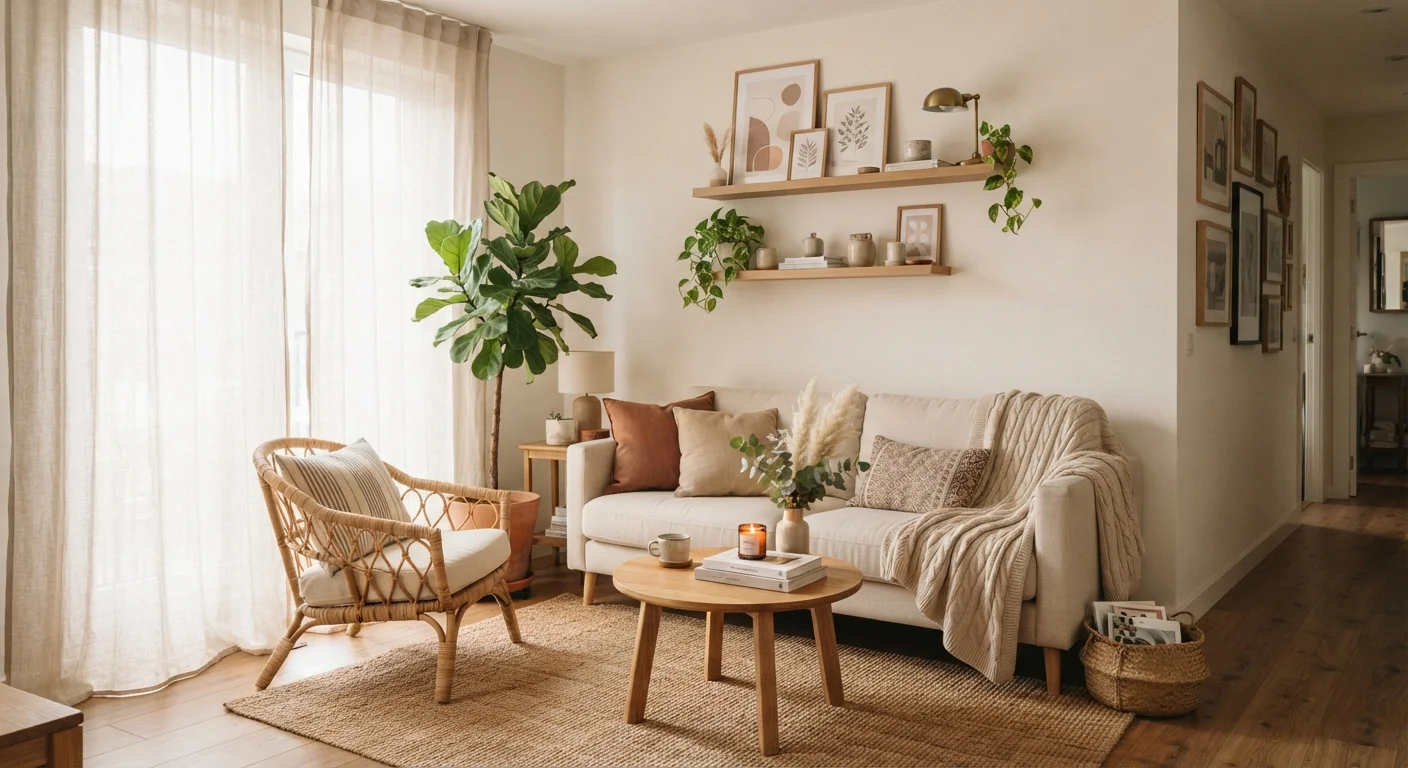
Look for furniture with visual lightness: pieces raised on legs allow sightlines to continue beneath them, which reads as more open space. A sofa with an exposed base will feel less imposing than a fully skirted one of the same size. Round or oval coffee tables also tend to work well in tight rooms because they eliminate sharp corners and ease movement around them.
Multifunctional pieces are worth prioritising. An ottoman that opens for storage, a console table that doubles as a desk, or a media unit with integrated shelving all reduce the need for additional furniture. This is where the real space gains happen - not in buying miniature versions of standard pieces, but in reducing the total count of items in the room.
~250 sq ft
Average small living room size in US apartments
Urban apartment living rooms in many US cities commonly fall in the 200-300 square foot range, according to residential design references.
3-4 pieces
Recommended furniture count for small living rooms
Interior design guidelines generally suggest limiting a compact living room to three or four key furniture pieces to maintain visual breathing room.
It's also worth being honest about what you actually need in a living room versus what you've inherited or accumulated. Removing one unnecessary piece often has more impact than any decorative addition.
Colour and Light: What Actually Works
Light colours - whites, soft creams, pale greys, and warm off-whites - genuinely do make walls recede and rooms feel larger. This is well-established in how human perception reads spatial depth. If you're working with limited natural light, a pale, warm-toned wall will reflect what light exists rather than absorb it.
That said, the idea that darker colours are categorically off-limits in small rooms is worth questioning. Several widely repeated decorating rules turn out to be wrong - dark tones used deliberately on a single accent wall or in a room with good natural light can create depth rather than compression.
Lighting itself is often overlooked. A single overhead fitting is rarely enough. Adding a floor lamp in a corner, a table lamp at sofa height, and possibly a small wall sconce creates layered light that makes a room feel both larger and warmer in the evening. Avoid placing lamps in the centre of the room - corners and edges push light outward, expanding the perceived boundary of the space.
Keep window treatments simple. Curtains hung close to the ceiling and extending slightly beyond the window frame make windows appear taller and flood the room with more light during the day.
Storage Strategies That Don't Sacrifice Style
One of the quickest ways to make a small living room feel cramped is to let storage creep across the floor. Moving storage vertically - up the walls - is one of the most practical things you can do.
Floating shelves, tall bookcases, and wall-mounted media units all free up floor space while making use of the full wall height. If you're considering open shelving, it's worth understanding the trade-offs: open shelves carry real day-to-day maintenance implications that photos don't always show.
Built-in storage around a fireplace or alcove is one of the highest-value uses of wall space in a small room. Even simple floating shelves fitted into recessed alcoves can dramatically reduce the need for freestanding furniture while giving the room a considered, intentional feel.
For items that don't need to be visible, prioritise closed storage: drawers in a media console, lidded baskets, or a storage bench along a wall. The goal is keeping surfaces clear enough that the eye can rest rather than constantly scanning for order.
When in doubt, remove one item rather than adding something new. A cleared surface or open stretch of floor almost always reads as more intentional than one more decorative piece.
Visual simplicity is harder to achieve by addition than by subtraction, and small rooms expose clutter far more quickly than large ones do.
Scale your rug to the seating area, not the room. A rug large enough for all front sofa legs to rest on anchors the space without making the room feel smaller.
A rug that's too small floats disconnectedly and visually fragments the floor, making the room feel less cohesive and actually smaller.
Finishing Touches That Add Depth Without Clutter
Once layout, furniture, and storage are resolved, the decorative layer is where personality enters. In a small room, restraint is a skill worth developing. A few well-chosen pieces at varying heights - a plant on the floor, a framed print at eye level, a small object on a shelf - create visual rhythm without noise.
Mirrors are genuinely useful, not just a styling cliché. A well-placed mirror reflects both light and the sense of space, particularly when positioned to reflect a window or a brighter part of the room rather than another wall.
Textiles add warmth without taking up physical space. A rug that's large enough to sit under at least the front legs of the sofa anchors the seating area and gives the room defined edges. Layering rugs, throws, and cushions thoughtfully can add depth without creating visual overload.
If you're decorating a rental and have limitations on what you can change structurally, rental-friendly decorating strategies can still make a significant difference to how the room feels - without jeopardising your deposit.
The consistent thread across all of these principles is intentionality. Small living rooms reward careful decisions and punish thoughtless accumulation. Start from what the room needs to do, then layer in what you want it to feel like.