

Key Takeaways
The Rule of Three
The Rule of Three is a decorating principle that suggests objects arranged in groups of three - or any odd number - are more visually appealing than even-numbered groupings. When items are grouped in threes, the eye moves naturally from one piece to the next, creating a sense of rhythm and balance without feeling rigid or symmetrical. It's one of the most accessible styling guidelines any homeowner can use immediately.
The principle has roots in classical art composition and the psychological concept of the Gestalt theory of perception, which describes how humans naturally seek patterns and groupings in visual information.
What the Rule of Three Actually Means
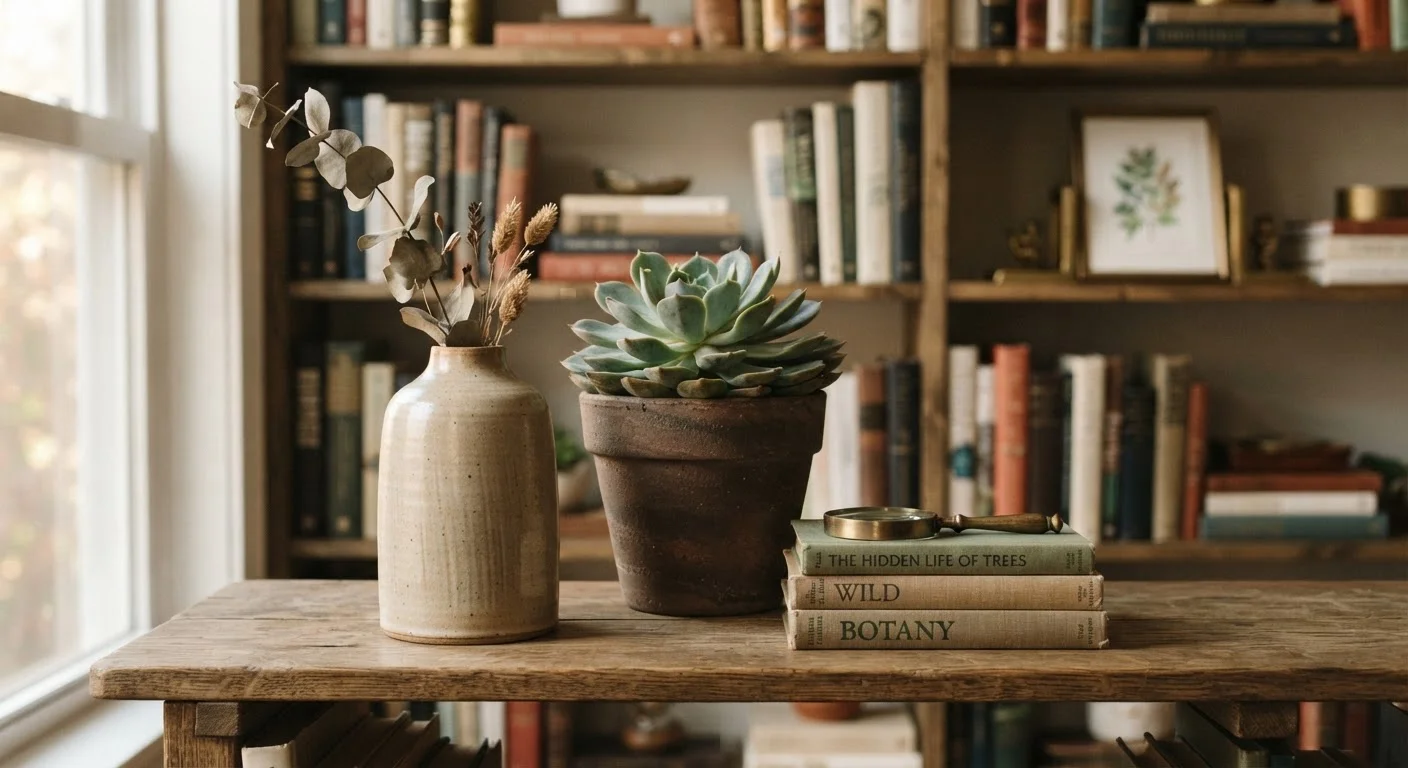
Walk into a room that feels effortlessly put-together and you'll likely spot it without realizing: objects grouped in threes. A tall lamp, a mid-height plant, and a low stack of books on a side table. Three framed prints arranged at different heights on a wall. A candle, a small vase, and a dish on a bathroom shelf.
The Rule of Three is the decorating principle that odd-numbered groupings are more visually dynamic than even ones. Two objects feel static - the eye lands on one, then the other, and stops. Three objects create a triangle of visual movement, a loop the eye keeps traveling. That subtle activity is what makes a space feel alive rather than staged.
This isn't arbitrary design folklore. It connects to the way human perception works: our brains are pattern-seeking, and odd groupings resist the easy symmetry that even numbers create. A group of three requires the eye to work just slightly harder, and that effort registers as interest rather than effort. Understanding this is a first step toward making rooms feel more intentional - and it pairs naturally with broader concepts like scale and proportion in decorating.
How to Build a Strong Grouping of Three
Not all trios work equally well. The most effective groupings vary across at least two of these three dimensions: height, size, and texture. A collection of three identically sized ceramic bowls lined up in a row is technically a group of three, but it reads as repetition rather than composition.
A stronger approach: pair a tall object (a vase, a candlestick, a framed piece leaning against the wall) with a medium-height object (a plant, a sculptural object, a stacked book) and a low anchor item (a small dish, a pebble, a short candle). Together they form a visual triangle - a shape with a clear top and base that feels stable while still being dynamic.
Mix Textures to Elevate Any Trio
When building a grouping of three, aim to include at least two different materials or surface finishes. Combining something natural (wood, stone, a living plant) with something manufactured (ceramic, glass, metal) instantly adds depth. This single adjustment can make even inexpensive objects look considered and intentional.
Texture matters as much as height. A grouping of three objects all made from the same material - say, three white ceramic pieces - can still look flat. Mix matte with glossy, natural with manufactured, smooth with rough, and even a simple trio will look considered. This same instinct applies when you think about why matching sets make rooms look flat.
Where to Apply It Around Your Home
Shelves: This is the most forgiving surface for practice. Pull everything off one shelf and start fresh with just three items. Adjust heights and materials until the grouping feels balanced. Repeat the process shelf by shelf rather than trying to style everything at once.
Coffee tables and console tables: A tray can help anchor a trio. Place a taller item like a small plant or a sculptural object at the back, a medium item in the middle, and a small flat item (a coaster stack, a small book) at the front. The tray gives the grouping a defined boundary so it doesn't look like scattered clutter.
Gallery walls: Groupings of three or five frames tend to cohere more naturally than pairs or fours. If you're planning a wall arrangement, our guide on gallery walls without the guesswork walks through how to plan spacing before a single nail goes in.
Outdoor spaces: The rule translates well to patios and garden beds. Three potted plants of varying heights on a porch step, or clusters of three plantings in a border, feel intentional and styled without looking overdone.
The Rule Works With What You Already Own
You don't need to purchase anything new to start applying the Rule of Three. Walk through your home and collect objects from different rooms - a candle here, a small vase there, a book from the nightstand. Experiment with groupings before deciding anything needs to be replaced or added. Many rooms look better after a rearrangement than after a shopping trip.
When the Rule Doesn't Apply - and How to Know
Deliberate symmetry is a valid and time-tested design choice. Matching sconces flanking a mirror, identical nightstands on either side of a bed, a pair of topiaries at an entryway - these work precisely because the symmetry communicates formality, calm, and order. The Rule of Three isn't about banning pairs; it's about understanding that pairs have a specific effect, and choosing it consciously.
Similarly, large collections - bookshelves full of books, a collection of art pottery, a gallery wall with dozens of pieces - don't need to strictly follow the rule. At scale, the overall massing creates its own visual interest. The rule is most useful for smaller, contained vignettes where the arrangement of individual objects is clearly visible.
If a room feels cluttered despite following the rule, the issue might be scale or proportion rather than grouping. Before rearranging further, it's worth reviewing key considerations before you rearrange your furniture - traffic flow, focal points, and lighting all affect whether a styled vignette feels right in context.
Ultimately, the Rule of Three is a starting point, not a constraint. Learn it, apply it, and then trust your eye when something feels off - or unexpectedly right.